The Code of the Oracle: Why Probability Matters in Divination
In the digital age, casting a hexagram is easy. A computer can generate six random lines in a millisecond.
But is that random generation authentic?
Most "I Ching Apps" treat the casting process like a coin toss: a 50/50 chance of getting Yin or Yang, and an equal chance of getting a "moving line."
This is mathematically incorrect.
At CastIChing.com, we reject the "black box" approach. We believe that the ritual—even a digital one—must respect the underlying structure of the traditional Yarrow Stalk method. Here is the math behind our code.
The "Coin" vs. The "Stalk"
To understand why our algorithm is different, we must compare the two most common methods:
1. The Three Coins Method:
- Simple and fast.
- Symmetrical Probability: The odds of getting an Old Yin (6) and an Old Yang (9) are identical (2/16 or 12.5% each).
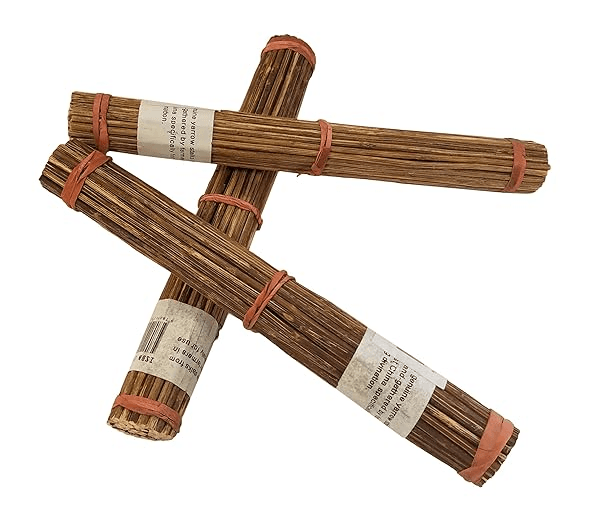
2. The Yarrow Stalk Method (49 Stalks):
- Complex and slow (18 distinct manipulations).
- Asymmetrical Probability: The odds are not equal. The universe of the Yarrow Stalks favors stability over change, and it favors certain types of change over others.
The Algorithm: Restoring the 1/16 Standard
In the traditional Yarrow ritual (as reconstructed by Zhu Xi), you undergo three distinct manipulations to generate a single line. The resulting numbers (remainders) determine whether you get a 6, 7, 8, or 9.
When you map out every possible combination of these remainders, a specific probability distribution emerges. This is the distinct "fingerprint" of the Yarrow method:
| Number | Type | Symbol | Coin Probability | Yarrow Probability (Our Code) |
|---|---|---|---|---|
| 8 | Young Yin (Static) | ⚋ | 6/16 (37.5%) | 7/16 (43.75%) |
| 7 | Young Yang (Static) | ⚊ | 6/16 (37.5%) | 5/16 (31.25%) |
| 9 | Old Yang (Moving) | ⚊○ | 2/16 (12.5%) | 3/16 (18.75%) |
| 6 | Old Yin (Moving) | ⚋× | 2/16 (12.5%) | 1/16 (6.25%) |
Revised Section: The Philosophy of Asymmetry
Look closely at the probabilities. While the total chance of change is identical in both methods (25%), the nature of that change is radically different.
1. The Coin Method (Symmetry):
Treats Yin and Yang as identical forces.
The odds of a collapsing Yin (6) are exactly the same as an exploding Yang (9).
It imposes a modern, artificial symmetry on the universe.
2. The Yarrow Method (Asymmetry):
Old Yang (9) appears 3 times more often than Old Yin (6).
This reflects a profound Taoist truth: Yang is Action, Yin is Structure.
Action (Yang) is volatile and prone to change. Structure (Yin) is heavy and resistant to change.
By using the Coin method, you are mathematically claiming that "a mountain is as easy to move as the wind." By using the Yarrow algorithm, you respect the physics of the Tao: the wind changes direction easily, but the mountain does not move unless forced.
In our algorithm, Old Yin (6) is the rarest number of all (1/16). True structural collapse is a rare event.
Our Commitment to "Digital Ritual"
When you click "Hang One" on CastIChing.com, we are not just pulling a random number from a hat.
We are running a probabilistic simulation that mirrors the 18 manipulations of the physical stalks. We respect the scarcity of the "Old Yin" and the volatility of the "Old Yang."
We believe that technology shouldn't simplify ancient wisdom—it should preserve it.