Too Much Noise: Why We Need Zhu Xi's Algorithm
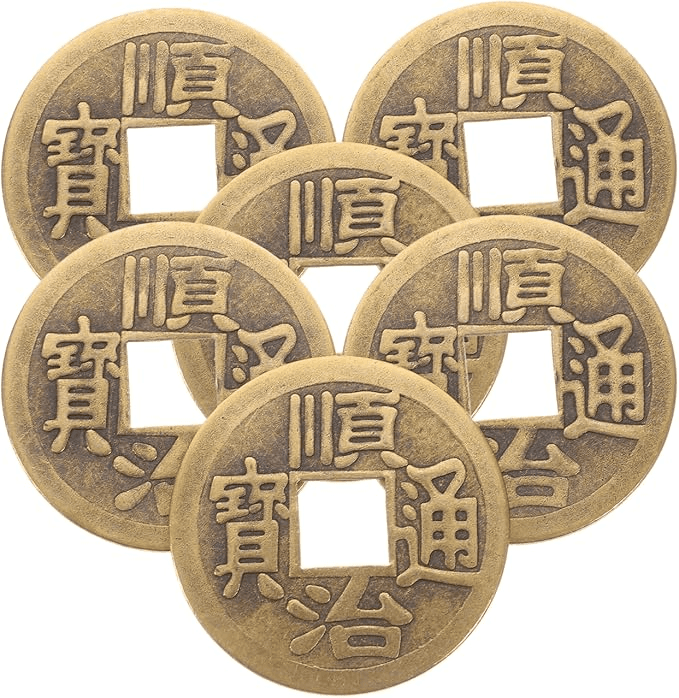
When you cast the I Ching, you want an answer.
Sometimes, you get too many.
You throw the coins. You get three moving lines. Or four. Or five.
Suddenly, you have:
- The Primary Hexagram judgement.
- The Image.
- Three or four different line texts (often conflicting).
- The Relating Hexagram judgement.
That is not an answer. That is a data dump.
When everything is highlighted, nothing is highlighted.
This is not a new problem. Eight hundred years ago, the Neo-Confucian philosopher Zhu Xi (朱熹) saw the same issue.
He didn't like the noise.
So he wrote a filter.
The Signal-to-Noise Ratio
Zhu Xi proposed a specific logic in his book Enlightenment on the I Ching (易学启蒙).
His goal was simple: Identify the Ruling Line.
He believed that not all moving lines are equal. Depending on how much creates change, the center of gravity shifts.
Here is how his logic works, stripped of the ancient language and viewed as a decision tree.
0 Moving Lines: The Baseline
Logic: The situation is stable. There is no variable.
What to Read: Read only the Primary Hexagram's Judgment.
Why: The "Model" is static. The general description of the situation is enough.
1 Moving Line: The Specific Variable
Logic: One thing is changing. That specific change is the focus.
What to Read: Read the Line Text of that specific moving line.
Note: Zhu Xi suggests you ignore the Hexagram Judgment and the Relating Hexagram. The "bug" (or feature) is exactly at this line.
2 Moving Lines: The Hierarchy
Logic: Two things are changing. But they are not equal.
What to Read: Read both Moving Lines, but prioritize the Upper Line.
Why: In the I Ching, lines move upward. The upper line represents a later stage of development or a higher position. It is the "result" or "ruling" factor of the change.
3 Moving Lines: The Tipping Point
Logic: Half the hexagram is changing. We are in the middle of a major transition.
What to Read: Read the Judgment of the Primary Hexagram AND the Judgment of the Relating Hexagram.
But here is the rule: The Primary Hexagram is the "Body" (current reality). The Relating Hexagram is the "Application" (trend).
If you must choose one, stick to the Primary Hexagram.
4 Moving Lines: The Shift to the Future
Logic: Most of the hexagram is changing. The "Old State" is fading. The "New State" is becoming dominant.
What to Read: Look at the Relating Hexagram (the future). Find the two completely non-moving lines.
Rule: Read the Lower of those two non-moving lines.
Comparison: With 2 moving lines, we looked at the moving ones. With 4 moving lines (which is just 2 stable lines inverted), we look at what remains stable. We look at the anchor in the storm.
5 Moving Lines: The Single Anchor
Logic: Everything is in flux except for one tiny point.
What to Read: Read the Relating Hexagram (the future). Look at the one single non-moving line.
Why: When the whole world is spinning, you look at the axis. That single stable line in the future outcome is your only solid ground.
6 Moving Lines: Complete Transformation
Logic: The situation has completely flipped. The old reality is gone.
What to Read: Read the Judgment of the Relating Hexagram.
Exception: If you cast all 6 lines changing in The Creative (1) or The Receptive (2), use the special "All Nines" or "All Sixes" texts.
Why This Matters (The Comparison)
Most modern apps use the "Read All" Strategy.
- Read All: "Here is every possible piece of text. You figure it out."
- Pros: Comprehensive.
- Cons: Overwhelming. Contradictory.
Some interpreters use the "Latest Line" Strategy.
- Latest Line: "Only read the top-most moving line."
- Pros: Simple.
- Cons: Ignores the stability of the future (Relating Hexagram) in high-change situations.
Zhu Xi's algorithm is different. It is dynamic.
It recognizes that Context Changes Focus:
- When change is small (1-2 lines), focus on the Change (Moving Lines).
- When change is medium (3 lines), focus on the Structure (Judgments).
- When change is large (4-5 lines), focus on the Future Stability (Relating Hexagram's stable lines).
It allows you to ignore 90% of the text to find the 10% that matters.
In a world of information overload, that is not just a method.
It is a mercy.
How We Implement It
We have updated our result page to follow this logic strictly, but transparently.
- The Gold Border: We highlight the specific section (Judgment or Line) that Zhu Xi identifies as the "Ruling Text."
- The "Study" Link: We provide a quick link to the full dictionary entry for each hexagram, so you can step out of the divination context and study the symbol as a whole.
- Reference Details: We know that sometimes, you want to see the noise. We have added a collapsible section "See Filtered Lines" at the bottom of the card. This contains the lines that Zhu Xi filtered out. They are there if you need them, but they stay out of your way until you ask.
We believe this gives you the best of both worlds: the clarity of an ancient algorithm, with the completeness of a modern digital tool.