
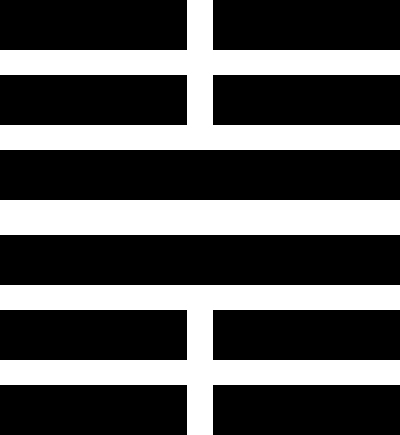
The Flying Bird and the Virtue of Small Excess
Hexagram 62 (Hsiao Kuo/Preponderance of the Small) bears the image of a Flying Bird. The I Ching uses this metaphor to teach a counter-intuitive lesson: there are times when doing "just enough" is not enough; one must do a little too much in the direction of caution.
The bird conveys a critical message: "It is better to descend than to ascend." In a time of imbalance, safety is found near the ground. The hexagram advises that while one should never overreach in major ambitions, it is auspicious to be "excessive" in small matters—being overly respectful in conduct, overly sorrowful in mourning, and overly thrifty in spending. This implies a philosophy of "Corrective Excess"—like bending a warped stick too far in the opposite direction to make it straight.
The lines of the hexagram serve as altitude warnings for this flight. The initial stage warns of the bird that flies before it is ready; blindly ascending against the wind leads only to disaster. The middle lines emphasize the necessity of Hyper-Vigilance. Even if one is strong (Line 3), one must be "over-defensive," guarding against dangers that haven't even appeared yet. It is better to be paranoid than unprepared.
The text culminates in a tragic image of Hubris at the Top Line. It depicts a bird that refuses to descend and flies higher and higher until it meets the hunter's net or calamity.
Summary: Hsiao Kuo teaches the "Art of Low-Flying." It reminds us that when the environment is unfavorable (Yin dominates Yang), the only way to succeed is to focus on the details, lower one's expectations, and master the power of humility. In such times, the one who tries to soar like an eagle falls, but the one who navigates the underbrush like a sparrow survives.


